This story is jointly published by nonprofits Amplify Utah and The Salt Lake Tribune to elevate diverse perspectives in local media through student journalism.
Soloau Te’o knew a shot at a national title was possible.
“We’ve been working to get into the Final Four for a couple years,” said Te’o, who plays for the Utah Vipers women’s rugby team. “We made it pretty close.”
The best the Vipers had done during Te’o’s 11 years with the team, though, was breaking into the round of 16 at various levels of national competition. But finally, 16 years after the club was created, and having ascended to the highest division of club rugby in the United States, everything seemed to be coming together for a championship season.
In 2024, the Vipers went undefeated in Rocky Mountain Rugby league play and swept the Gulf Coast Super Regional, earning a spot in the USA Club Rugby Division 1 semifinals. After a commanding win in the semis, the opportunity to take the national title was finally within reach.
But that’s where their momentum stalled out.
Now, Te’o and her team have another chance. They’ll face the Houston Athletic Rugby Club on Friday in Indianapolis. A win there will set the Vipers up for a potential championship rematch with the Northern Virginia Women’s Rugby Club, which will face the Minneapolis Metropolis Valkyries in its semi-final match.
And the way Te’o sees it, her team has “no choice but to win.”
‘Just trying to learn the game’
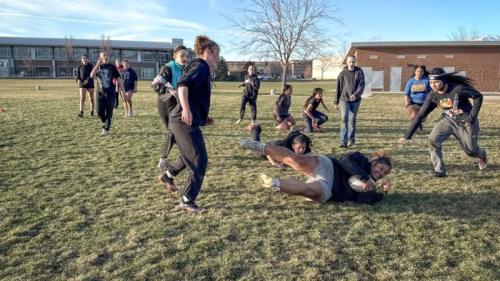
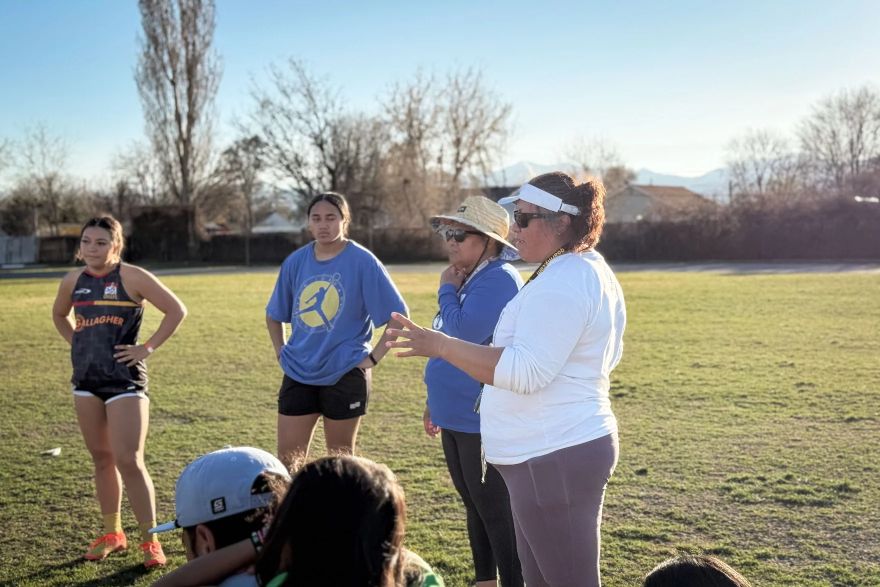
Head coaches David Shelledy and Olive Ahotaeiloa founded the Vipers in 2009, aiming to give teenage girls in and around South Jordan a shot at playing a sport that most high schools in Utah don’t sponsor. After a couple years, though, the coaches realized their team was the last one many of those girls would play for.
“There’s a lot of them that don’t go to college, and so they can’t play on a college team,” Shelledy said. “And the younger girls were done with high school and they wanted to keep playing.”
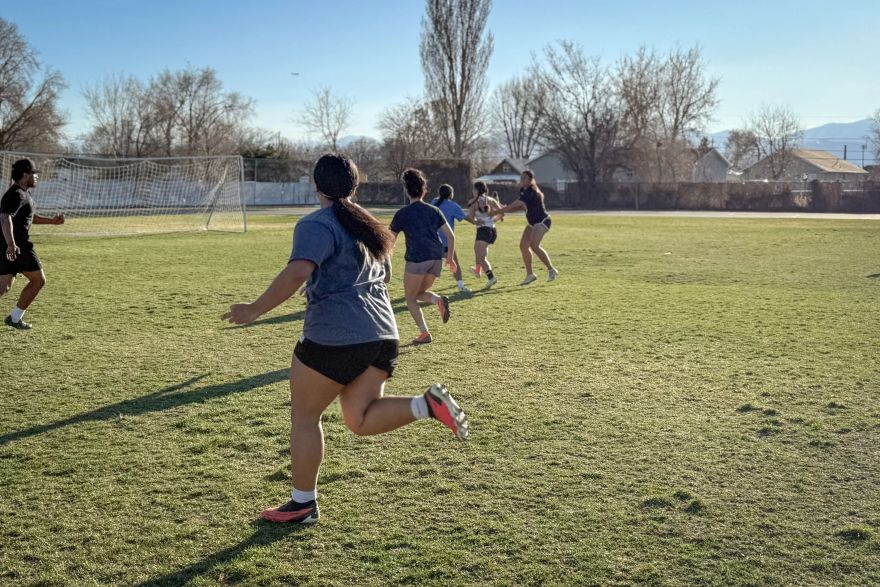
So, Shelledy said, the organization decided to shift its demographic to help adult women keep the sport in their lives. While many of the team’s players have athletic backgrounds, some didn’t grow up playing the game much, if at all.
“It was a new sport to me,” said Tamasailau Tavita, who joined the Vipers in 2014. “I didn’t even know there was even a D1 level. I was just trying to learn the game, and that was my main focus.”
Tavita said she didn’t even consider that playing in a national championship could be a possibility back then. And as recently as two seasons ago — when both the Vipers’ senior team and its D2 affiliate, the Salt City Slugs, went winless in Rocky Mountain Rugby play — it didn’t seem like it was in the cards.
But last year something shifted.
The Vipers outscored their opponents by an average of 33 points during the regular 2024 season. That energy continued in the semifinal match, where 18 seconds after kicking off to the Pittsburgh Forge, Utah stripped the ball at the 22-meter line, and Vaimalo Manuo took a rumbling run through the center of the pitch for the game’s first score. The Vipers never trailed, and their 33-21 victory earned them a spot in their first national title game against Northern Virginia.
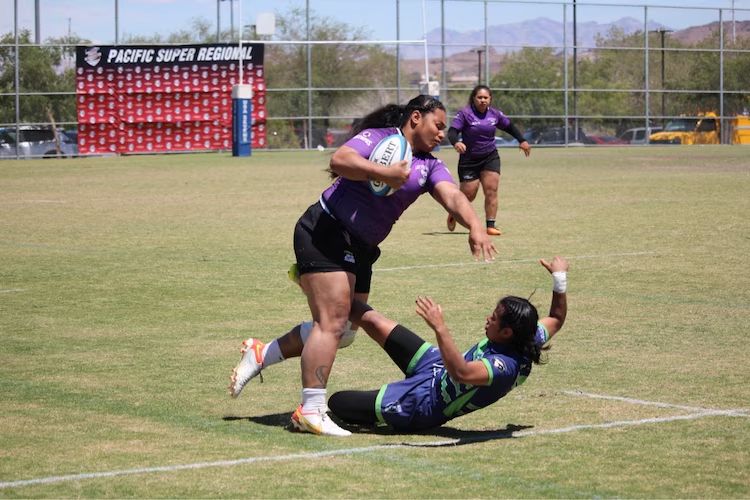
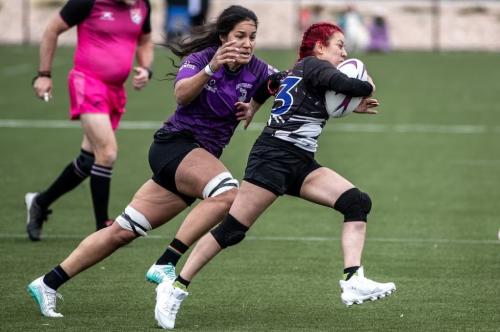
(Payton Mckee) Apa'au Mailau of the Utah Vipers, left, takes on a player from the Seattle Rugby Club in a match on April 27, 2025.
‘It sucked, to be honest’
Although the Vipers had overpowered their competition in the regular season, they’d picked up some injuries along the way — and their semifinal game brought even more.
“It sucked, to be honest,” Tavita said. “We didn’t have a full squad at the time, and a few of us were playing a little injured because of our first game.”
The Vipers went into the title game in Round Rock, Texas, with two fewer players on their bench than their opponents. Tough luck came down on them again in the 20th minute, when Breauna Nez was helped off the field by team trainers.
Even with short numbers, Tavita said, “I just think everybody went out and gave it their all.”
But that wasn’t enough. The Vipers didn’t put any points on the board until the final minutes of the first half. Another 40 minutes of rugby later, they’d fallen 44-12.
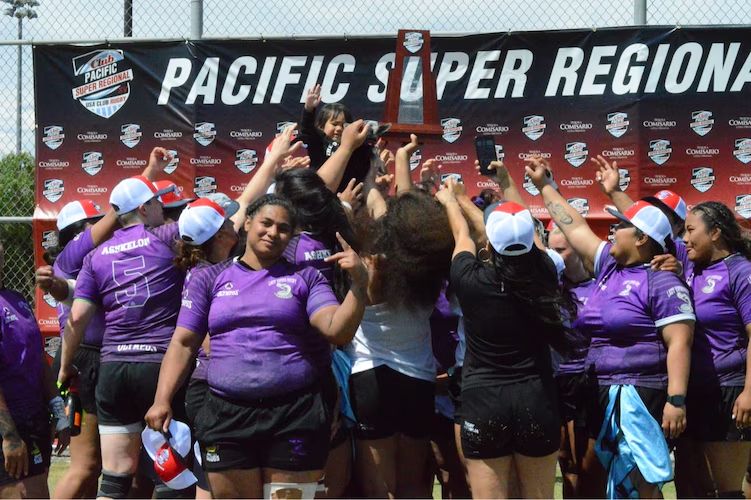
(Nahe Kahala-Giron) The Utah Vipers women's rugby team celebrates its win against the Seattle Rugby Club at the Pacific Super Regional Championship on April 27, 2025.
‘It was like a 360’
Tavita said the shortfall in the championship finals was hard — especially because the title wasn’t the only thing on the line in competition.
“A lot of us are paying to play,” she said. “We have a few sponsors, but they’re like sponsoring gear, not so much like funds — and that’s where we struggle a lot, is funds to raise as a team.”
That hurdle aside, though, Tavita said things will be different when her team arrives in Indianapolis.
In the midst of a national spike in players for USA Club Rugby, the Vipers’ team leaders said they now have the numbers they need. Tavita thinks the team’s “hunger” has changed since they came so close to the national title and walked away empty-handed. And Te’o agreed.
“Everybody’s mindsets just kind of changed. It was like a 360 immediately after that loss,” she said. “It was like, ‘Let’s just get back into that mode, get in the gym, do what we got to do on our offseason.’”
Shelledy noticed the change, too. Now, he said, his players understand what it takes to make it to and win the finals. “We just have a really good team this year, a good solid team going into it,” he said. “They’re excited, and they’re really driven to get there, so I think they’ll take it this year.”
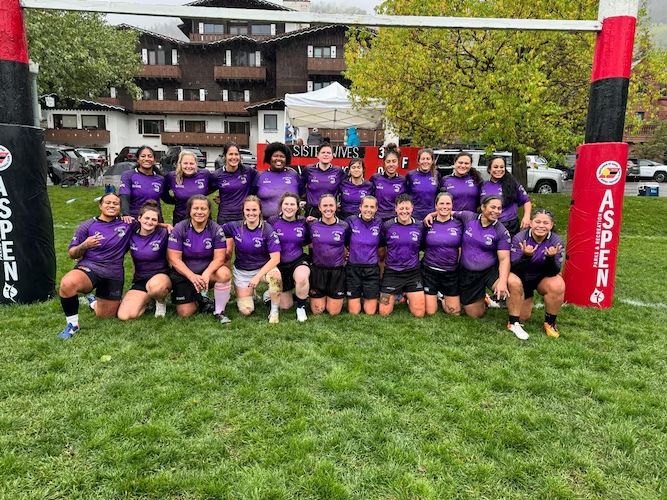
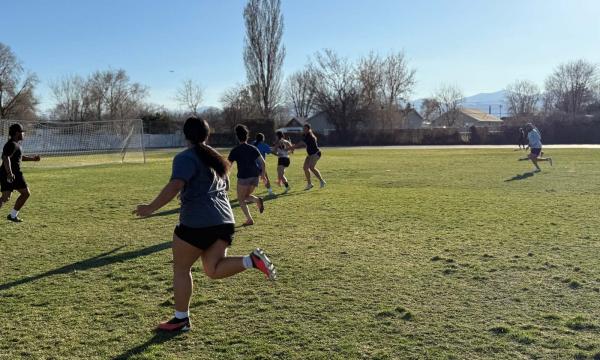
(Courtesy Utah Vipers) The Utah Vipers are an all-women rugby team, ranging in age from 18 to 52, according to Head Coach David Shelledy. The team was established 16 years ago to give players the opportunity to play at a higher level when they could no longer compete for school teams.
‘Rugby is there’
Te’o said it was hard to come home without the win — and so this year, she said, her team is planning on “taking everything.”
But for these women, it’s not just about the title and the trophy.
“Rugby [is] for everybody. It doesn’t matter your age, doesn’t matter your size, doesn’t matter what you look like, what job you have, whatever,” Te’o said. “We want it to stick around forever, and this is our way of contributing to the sport.”
Te’o said many of the women on the team are moms, and almost all of the players have other full-time jobs. For many of them, rugby is an outlet to take time for themselves and find support in a tight-knit sisterhood.
“Where life gets in the way, rugby is there,” she said. “I hope it just means that we can grow the sport, so more and more people will look into it, look into us, and want to participate, and want to bring the same thing that we bring to our community.”
Tavita also said that winning the national title is, in no small part, about showing other women in Utah what’s possible.
“The bigger picture is recruiting more and more women and younger women,” she said. “There’s so many. There’s so much talent. They can carry on the legacy, as some of us vets are able to just either coach or step down. I mean, it’s carrying on the legacy of the Vipers.”
The Utah Vipers are soliciting donations to support their travel to Indianapolis via Venmo (@ladyvipersrugby) and Cashapp ($ladyvipersrugby).
Elle Crossley wrote this story as a journalism student at the University of Utah for a capstone course focused on women’s sports. It is published as part of a collaborative including nonprofits Amplify Utah and The Salt Lake Tribune.