

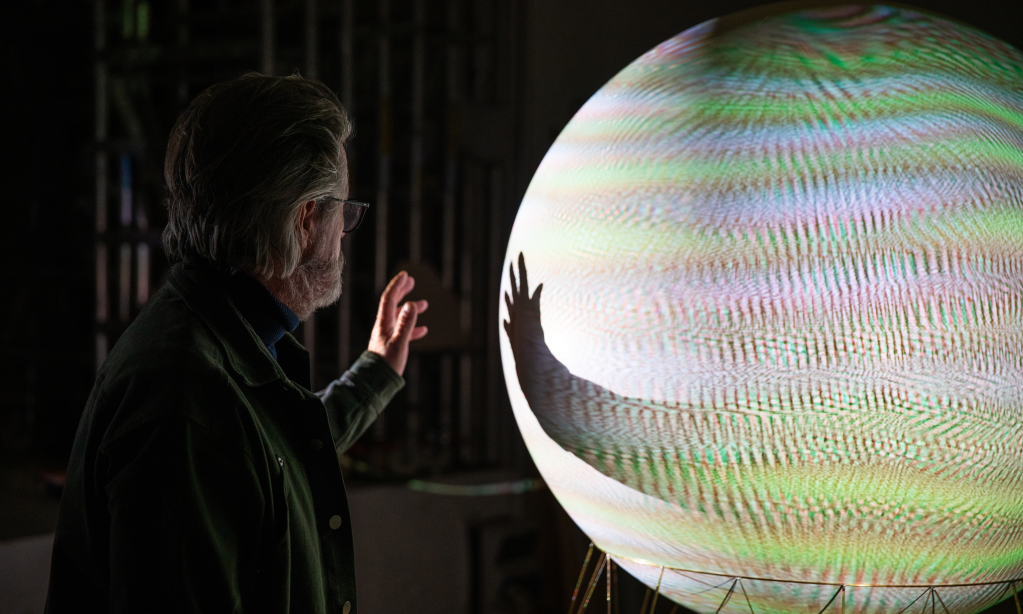
The green landscapes, stone bridges and monuments of Memory Grove Park just north of downtown Salt Lake City will soon make room for a three-story illuminated sphere. The art installation will combine light, projection and sound to create what artist Olafur Eliasson calls a symphony of nature.
Eliasson, an internationally known artist, will debut the immersive installation from March 26 to April 4 as part of the Wake the Great Salt Lake project. Each evening at 9 p.m., the experience will transform the park into a stage for a tribute to the Great Salt Lake.
The inflatable sphere serves as a projection screen for shifting visuals drawn from natural forms like salt crystals and geometric patterns found in nature. Surrounding the sphere is a layered soundscape built from recordings of animals native to the lake ecosystem, creating a 30-minute immersive experience that blends light, sound and environmental storytelling.
Project organizers say that the goal is to create a sense of shared responsibility. By bringing local communities together to learn about the lake’s future, the hope is to transform an environmental issue into a moment of collective reflection and action.
By placing art in public spaces, organizers hope to reach residents in ways that policy discussions or scientific reports often cannot.
“The Great Salt Lake is not only an environmental landmark, but a defining part of Utah’s identity and cultural landscape,” said Felicia Baca, executive director of the Salt Lake City Arts Council. “Public art has a unique ability to translate complex issues into experiences people can feel and remember.”
Art as a civic gathering point
Eliasson’s installation centers on the sounds and rhythms of the lake’s ecosystem.
“We have made something I called a symphony played as if nature would play it for humans,” Eliasson said during a recent press briefing. “It is a rhythm or it's a sort of a sound and visual journey that is somehow aimed at human ears. There's a pulse to it.”
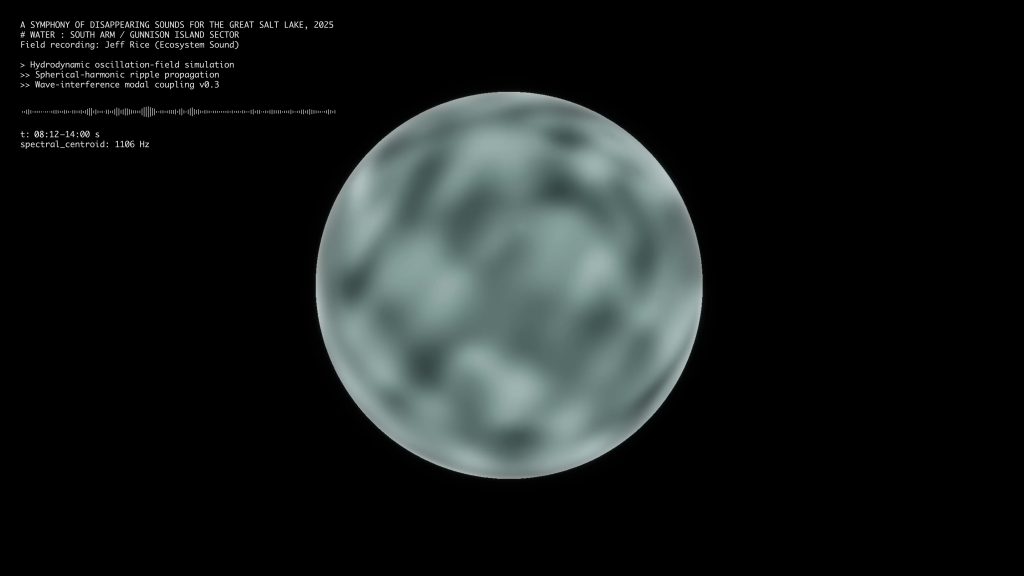
(Courtesy: Studio Olafur Elisson)
Eliasson said the project highlights how fragile and important the ecosystem is.
“When the little shrimp disappears, then a whole ecosystem of other species also disappears,” he said. “Sometimes even species that are not endangered disappear because what they eat becomes endangered.” The installation draws from recordings and representations of the lake’s animals and insects, including brine shrimp, crickets and birds.
Beyond its environmental message, Eliasson said, the art is designed as a community experience.
“It’s a public space. It belongs to the city, and therefore it belongs to everyone,” he said. “Experiencing something together outdoors is a privilege.”
Local perspective on lake’s future
Utah locals hope the installation will encourage residents to reflect on their relationship with the lake and the role communities play in protecting it.
For many people living along the Wasatch Front, the lake is both a defining landscape as well as an environmental challenge.
“To me it’s like this oasis that makes you feel a million miles away from the city,” said Katie Newburn, education and outreach director for Friends of Great Salt Lake. “It’s otherworldly, the birds, the expanse. It reminds me of the ocean.”
Newburn said public awareness about the lake’s condition has grown significantly in recent years, especially after the lake reached historic low water levels in 2022. Environmental groups and policymakers have since pushed for water conservation and restoration strategies.
Newburn said connecting people emotionally to the lake is essential.
“Art has the power to reach people in ways that science and policy sometimes can’t,” she said. “It helps people connect with the lake, appreciate it and ultimately participate in its restoration.”
Art projects like Wake the Great Salt Lake can help bring communities to environmental issues through public engagement by inviting residents to experience the issue in a more personal way, organizers say.
Newburn said she hopes visitors leave the installation not only more aware of the lake’s challenges but also inspired by the possibility of protecting it.
“I hope people leave with a sense of hope and inspiration about how much can still be saved,” she said.
Caitlyn Homolya, a student from the University of Utah, wrote this article through a collaboration with Amplify Utah and the Great Salt Lake Collaborative.
