

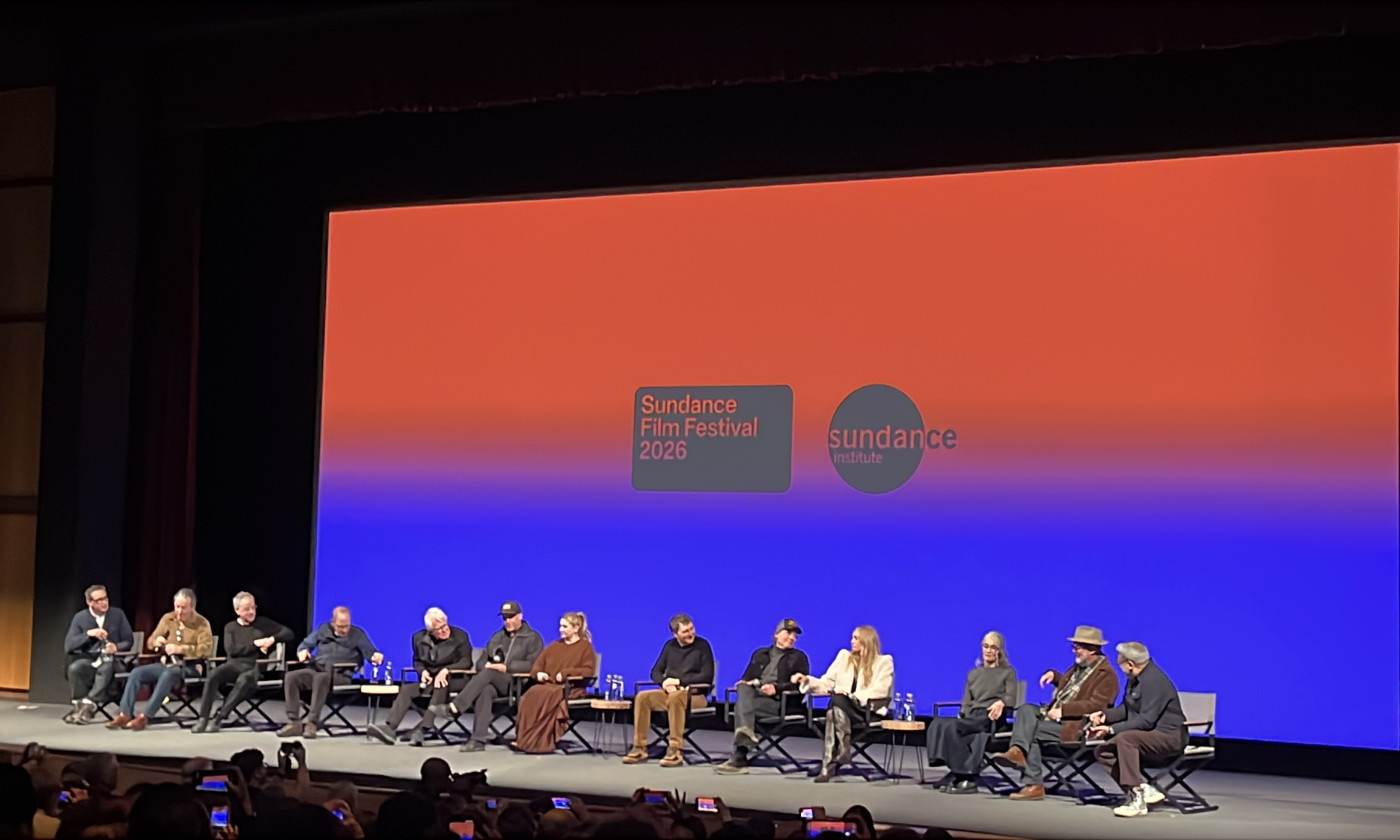
When I was asked to cover the Sundance Film Festival as an internship this year, I was in disbelief.
Writing about Sundance had been a dream since deciding to become a journalist two years ago. As an avid patron of the arts, covering a medium I was so passionate about seemed like a natural fit.
Although my role as a student journalist pivoted to news writing, I was looking forward to writing about something so close to my heart. I remember the first time I saw Whiplash, my favorite movie of all time and the Sundance 2014 opening night film. Its anxiety-inducing cinematography, the obsessed artist trope and the relationship between a drummer and his ruthless jazz instructor reinforced why it nabbed both the Grand Jury Prize and the Audience Award for the U.S. Dramatic competition that year.
But I didn’t know it premiered in Park City until two weeks ago, when I was walking Main Street as a reporter covering the festival’s last year in Utah.
Like the drummer Andrew Neiman in Whiplash played brilliantly by Miles Teller, I was immediately thrust into a high-pressure, high-stakes environment. Although I didn’t have a vicious drum instructor breathing down my neck, the pressure and daily deadlines for the stories I was writing were a test I’d never experienced. But it was here at the festival that I learned I did, in fact, have “what it takes.”
It was here, waiting in the freezing cold, asking directors questions next to veteran reporters who had years more experience than I did that I realized I wasn’t just a student journalist working on articles for class. I had fully stepped into the role of being an arts reporter.
After the first weekend, I felt so thrilled to have my finger right on the pulse of one of the biggest film events in the country. But the second weekend, that all came to a screeching halt – after seeing the thousands of protests against federal immigration law enforcement’s shooting of Alex Pretti erupt across the country.
I have to admit, I couldn’t help feeling guilty that I was covering the arts at a time where political reporting was paramount to ensuring factual accuracy and truthful coverage of these watershed events.
I had been too caught up in my own personal ethical dilemma to realize the advocacy and activism through art that was happening in front of me. This community of filmmakers realized there were stories overlooked that deserved to be told, a sentiment that so deeply resonates with me as a journalist.
I remember agonizing over current events in my head in line for a panel I was supposed to cover that day, thinking I wasn’t doing enough. To my surprise, the ACLU panel discussing film censorship took every moment they could to acknowledge actions taken by ICE, as well as the killings of Renee Good and Alex Pretti at immigration enforcement’s hands.
These directors and filmmakers were making art that did just what I tortured myself over not doing: shedding light on pertinent and often tragic issues. Films like American Doctor and Birds of War depict wartime from a personal, intimate lens. The documentary The Lake sheds light on the uncertain fate of the Great Salt Lake and its impact on Utah as a whole.
It was that weekend, after sitting with the weight of these stories, I experienced a first in my newswriting career: I wrote my first protest story as I covered the ICE-OUT march in Park City. This protest condemned the actions of Immigrations and Customs Enforcement (ICE), and called for broad, systemic change to the system that had allowed these atrocities to happen.
I was covering something historic, not just because this was the festival’s last year in Utah, but how the stories shared on the screens reflected today’s world. These communities of storytellers are the driving force behind the voices and messages being amplified.
Although many of these documentary films are not available to the public just yet, organizations like the Utah Film Center show films from local filmmakers from a range of backgrounds, and provide workshops for aspiring filmmakers in the state. Since they operate as a nonprofit, many of the films shown there are completely free.
I ask you to pay attention to the work of these filmmakers. Our world needs to see it.
